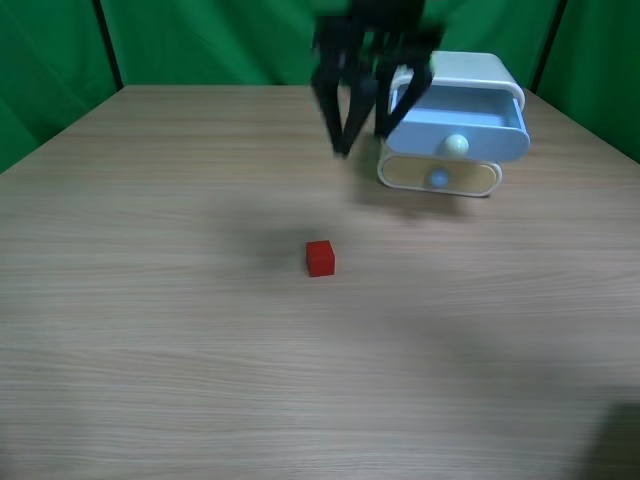
Figure 1. EquiVLA integrates $SO(2)$ equivariance into pretrained VLA models. It preserves pretrained VLM weights, improves real-robot success by 18 percentage points, and reduces measured equivariance error by 27.3×.
92.6%
LIBERO avg success (+14.5pp) vs. GR00T N1.5
84.5%
LIBERO success with only 40% of demonstrations
27.3×
lower measured equivariance error on $C_8$ rotations
54→72%
Mobile ALOHA real-robot success (+18pp)
Abstract
Vision–Language–Action (VLA) models benefit from large-scale pretraining but generally do not encode how observations and actions transform under planar rotations, and therefore must learn robustness to object-pose variation from data. We present EquiVLA, a modular approach for adding rotational equivariance to pretrained VLAs with a vision–language backbone and a flow-matching Diffusion Transformer action head while retaining the pretrained vision–language weights.
EquiVLA introduces EquiPerceptor, which applies token-level Frame Averaging to spatial ViT features, and EquiActor, which replaces the original action head with an equivariant flow-matching Diffusion Transformer. Designed around $SO(2)$ scene rotations and implemented over a finite cyclic subgroup, the two modules provide approximate end-to-end equivariance from observations to predicted actions.
Instantiated on GR00T N1.5, EquiVLA improves LIBERO success by +14.5 pp under relative control. With only 40% of the LIBERO demonstrations, it reaches 84.5%, exceeding the baseline's 78.1% with the full dataset. It also reduces measured equivariance error by 27.3×, improves average success by +10.7 pp on tested unseen scene rotations, raises MimicGen average success from 26.5% to 48.5%, improves CALVIN, and increases Mobile ALOHA real-robot success from 54% to 72%.
Method Overview
EquiVLA adds planar rotational structure to VLA architectures through two composable modules. In the pretrained setting, it retains the VLM weights while replacing the original action head. We use $C_8 \leq SO(2)$ by default as an accuracy–latency trade-off.
Figure 2. EquiVLA architecture. EquiPerceptor produces equivariant and invariant visual streams while preserving the pretrained VLM; EquiActor predicts equivariant action chunks with a flow-matching Diffusion Transformer.
EquiPerceptor extends Frame Averaging from globally pooled vectors to spatially-indexed ViT patch token sequences. When the input image is rotated, patch tokens are displaced in the grid, so naive averaging destroys spatial localization. EquiPerceptor applies the inverse group action jointly at two levels: a spatial permutation $\tau(h^{-1})$ that maps each displaced token back to its canonical patch position, and a feature-space transformation $\rho_{\text{reg}}(h^{-1})$ in the regular representation of $G$.
This yields two streams:
zeq
equivariant token map — transforms with the scene
zinv
invariant token map — rotation-independent
zinv is fed into the frozen VLM alongside wrist-camera and language tokens to produce language-grounded context tokens zctx. An Equivariant Adapter fuses zeq and zctx through learned gates that depend only on invariant quantities, producing the final context zout while preserving equivariance.
🎯
EquiActor
— Equivariant Flow-Matching DiT over $C_u$
EquiActor replaces the standard DiT action head with a $C_u$-equivariant counterpart built with steerable layers in regular-representation space. State and noisy-action encoders, cross- and self-attention, feed-forward blocks, and the action decoder all preserve equivariance. Attention scores use the geometric inner product $\langle q, k\rangle = \sum_{g} q[g]\cdot k[g]$, which is invariant to the cyclic permutation induced by the regular representation.
Action representation. End-effector position and orientation transform as $SO(2)$ vectors under scene rotation, while gripper width is rotation-invariant. The group action on the action vector decomposes into irreducible representations depending on the control mode:
Absolute control: $\rho_1^{3} \oplus (\rho_1 \oplus \rho_0) \oplus \rho_0$ — where $\rho_1^{3}$ encodes the 6D end-effector rotation as three 2D vector pairs, $\rho_1 \oplus \rho_0$ encodes $xy$ translation and $z$ height, and $\rho_0$ encodes gripper width.
Relative control: $\rho_0^{6} \oplus \rho_1^{4} \oplus \rho_2$ — where $\rho_0^{6}$ encodes invariant scalar offsets and $\rho_2$ captures the frequency-2 component from quadratic terms in the relative rotation decomposition.
EquiActor is trained from scratch, as steerable layers are structurally incompatible with unconstrained pretrained weights. The equivariant inductive bias compensates for the loss of pretrained action-head initialization.
End-to-End Equivariance Guarantee
Together, EquiPerceptor and EquiActor establish an approximate $SO(2)$ equivariance chain:
EquiActor's velocity field is exactly $G$-equivariant when its context transforms as specified. The full relation is approximate because discrete image rotations and nearest-neighbor alignment can move rotated patch centers off the ViT grid; alignment is exact for grid-preserving rotations such as $C_4$ on a square grid.
Assumption. Let the EquiActor map $\mathcal{A}$ be $L$-Lipschitz with respect to its visual context: $\|\mathcal{A}(z_1)-\mathcal{A}(z_2)\| \leq L\|z_1-z_2\|$.
End-to-End Equivariance Bound. For the full policy $\pi(o)=\mathcal{A}(\mathcal{P}(o))$ and every $g\in G$,
Here, $\Delta$ is the spatial representation defect introduced by patch-grid alignment, $B(o)=\max_{h\in G}\|f_\theta(h\!\cdot\!x)\|$ bounds the ViT feature magnitude, and $L$ measures EquiActor's sensitivity to visual-context perturbations.
Proof sketch. Token-level Frame Averaging gives an approximately equivariant perception map whose residual is bounded by the representation defect:
The Equivariant Adapter preserves the transformation law of the perception features.
The EquiActor velocity field and ODE integration are exactly $G$-equivariant when their context transforms as specified.
Therefore the equivariant component maps exactly to $\rho_a(g)\pi(o)$; only the residual $\varepsilon$ remains.
Applying the $L$-Lipschitz property bounds its effect by $L\|\varepsilon\|\leq L\Delta B(o)$, proving the result.
Interpretation. For grid-preserving rotations such as $C_4$ on a square patch grid, $\Delta=0$ and the bound becomes exact under the stated assumptions. For $C_8$, the $45^\circ$-offset rotations introduce a small discretization residual. Empirically, EquiVLA reduces measured equivariance error from $7.754$ to $0.284$ — a $27.3\times$ reduction.
View Full Proof — All Propositions, Theorem, and Corollaries
Notation and Setting
Let $G=C_u$ be a cyclic group of planar rotations acting on images by $g\!\cdot\!x$. The frozen ViT $f_\theta:\mathbb{R}^{H\times W\times3}\to\mathbb{R}^{N\times D}$ produces $N$ patch tokens. Define the output action $A(h)=\tau(h)\otimes\rho_{\mathrm{reg}}(h)$, where $\tau(h)\in\mathrm{Perm}(N)$ permutes token positions and $\rho_{\mathrm{reg}}(h)$ is the regular representation. For nearest-neighbor grid reassignment, write $\widetilde{\tau}$ and $\widetilde{A}(h)=\widetilde{\tau}(h)\otimes\rho_{\mathrm{reg}}(h)$. The full observation is $o$, with image component $x$.
Proposition 1 — Exact Token-Level FA Equivariance
Statement. Suppose $\tau:G\to\mathrm{Perm}(N)$ is a group homomorphism, i.e., $\tau(gh)=\tau(g)\circ\tau(h)$ for all $g,h\in G$. Then
The third equality uses $A(g(h')^{-1})=A(g)A((h')^{-1})$. This holds because $\tau$ is a homomorphism and $\rho_{\mathrm{reg}}$ is a group representation, hence $A=\tau\otimes\rho_{\mathrm{reg}}$ is also a homomorphism. $\square$
Statement. Let $\widetilde{z}^{\mathrm{eq}}$ be token-level Frame Averaging with approximate spatial reassignment $\widetilde{\tau}$. For all $g\in G$,
The first inequality follows from the triangle inequality and the definition of the operator norm. The second uses $\|D(g,h^{-1})\|_{\mathrm{op}}\leq\Delta$ and $\|f_\theta(h\!\cdot\!x)\|\leq B(x)$. $\square$
Proposition 2 — Grid-Aligned Rotations and Geometric Defect
Here $p_i$ is a patch center on an $n\times n$ grid with spacing $p$. For interior patches whose rotated positions remain inside the grid's convex hull, $\delta_h(i)\leq p\sqrt{2}/2$; boundary patches can exceed this value.
Proposition
(a) Exact case. If $\delta_h(i)=0$ for every $h$ and $i$, then $\Delta=0$. On a square grid this holds when $u$ divides $4$, because $90^\circ$ rotations map patch centers exactly to patch centers.
**(b) $C_4$ subgroup.** In $C_8$, the subgroup $\{0^\circ,90^\circ,180^\circ,270^\circ\}$ has zero displacement. The defect comes only from the coset $\{45^\circ,135^\circ,225^\circ,315^\circ\}$.
(c) Coset structure. For $g\in C_4\leq C_8$, $D(g,h)=0$ whenever $h\in C_4$. Thus at most four terms in the approximate bound are non-zero.
(d) Permutation-norm bound. Universally, $\|D(g,h)\|_{\mathrm{op}}\leq2$ and $\|D(g,h)\|_F=\sqrt{2m(g,h)}$, where $m(g,h)$ counts positions at which composed nearest-neighbor reassignments disagree with reassignment under the composed rotation.
(e) Displacement–defect connection. A disagreement can occur only when the accumulated displacement is at least one grid spacing.
Consequently, $m(g,h)$ is at most the number of positions satisfying the displacement inequality above.
Proof
(a) If every displacement vanishes, each rotation maps every patch center exactly to another. The unique tracking permutation therefore satisfies $\widetilde{\tau}(gh)=\widetilde{\tau}(g)\circ\widetilde{\tau}(h)$, so $\Delta=0$. On an integer square grid, $(x,y)\mapsto(-y,x)$ is a bijection, hence all multiples of $90^\circ$ are exact. A $45^\circ$ rotation maps $(x,y)$ to $((x-y)/\sqrt2,(x+y)/\sqrt2)$ and generally leaves the integer lattice.
(b) Apply part (a) to the $C_4$ subgroup.
(c) If $g,h\in C_4$, both spatial actions are exact and $gh\in C_4$ by closure. Hence $D(g,h)=0$. Restricting the residual sum to $h\notin C_4$ leaves at most $|G\setminus C_4|=4$ terms and gives the factor-$1/2$ bound.
(d) Both $\widetilde{\tau}(gh)$ and $\widetilde{\tau}(g)\circ\widetilde{\tau}(h)$ are $N\times N$ permutation matrices. Each disagreeing position contributes exactly two to the squared Frobenius norm, so $\|D\|_F=\sqrt{2m}$. The operator-norm bound follows from the triangle inequality and the unit operator norm of permutation matrices.
(e) The composed path sends $i$ to the grid point nearest $g\!\cdot\!p_{\widetilde{\tau}(h)(i)}$, whereas the direct path sends it to the grid point nearest $(gh)\!\cdot\!p_i$. Since $g$ is an isometry,
By the triangle inequality, the distance between the two selected target grid points is bounded by $\delta_h(i)+\delta_g(\widetilde{\tau}(h)(i))+\delta_{gh}(i)$. Distinct grid points are separated by at least $p$, which gives the stated condition by contraposition. $\square$
Computed $C_8$ Defect Values
Unit grid spacing $p=1$. Every $C_4\times C_4$ pair has $m=0$; the $45^\circ$-offset coset is the only source of non-zero defect.
$n$
$N$
$\delta_{\max}$
$\max m$
$m/N$
$\|D\|_F$
Non-zero pairs
14
196
2.74
68
34.7%
11.66
38/64
16
256
3.15
80
31.2%
12.65
34/64
24
576
4.79
176
30.6%
18.76
38/64
32
1024
6.44
328
32.0%
25.61
38/64
Proposition 3 — Equivariant Adapter
Statement. Let $\widetilde{z}^{\mathrm{eq}}$ be $G$-equivariant in the regular representation; let $s^{\mathrm{inv}},s^{\mathrm{lang}},s^{\mathrm{vis}}$ be invariant; and let $W_g$ and $W_s$ be $G$-equivariant linear maps. Then
is equivariant: $z^{\mathrm{out}}_{\mathrm{eq}}(g\!\cdot\!x)=\rho_{\mathrm{reg}}(g)z^{\mathrm{out}}_{\mathrm{eq}}(x)$.
Proof
The gate $\alpha=\sigma(W_{\mathrm{gate}}[s^{\mathrm{lang}};s^{\mathrm{vis}};\bar z^{\mathrm{eq}}])$ depends only on invariant inputs, so it is invariant. Its tiling $\alpha^{\mathrm{reg}}=\alpha\otimes\mathbf{1}_{|G|}$ remains invariant because $\rho_{\mathrm{reg}}(g)$ only cyclically permutes group coordinates and fixes $\mathbf{1}_{|G|}$.
Semantic branch. The tiled semantic feature $s^{\mathrm{inv}}\otimes\mathbf{1}_{|G|}$ is invariant in regular-representation space. Equivariance of $W_s$ therefore makes $W_s(s^{\mathrm{inv}}\otimes\mathbf{1}_{|G|})$ invariant.
Equivariant branch. By assumption, $W_g(\rho_{\mathrm{reg}}(g)\widetilde z^{\mathrm{eq}})=\rho_{\mathrm{reg}}(g)W_g(\widetilde z^{\mathrm{eq}})$.
Combination. Since $\alpha^{\mathrm{reg}}$ is invariant and $\rho_{\mathrm{reg}}(g)$ is a coordinate permutation, Hadamard products commute with the action:
Applying this identity to both branches, using invariance of the semantic branch and equivariance of $W_g$, gives exactly the adapter output evaluated at $g\!\cdot\!x$. $\square$
Proposition 4 — Flow-Matching Compatibility with Equivariance
Statement. Let $\rho_a$ be the $SO(2)$ representation on action space, and suppose EquiActor implements a $G$-equivariant velocity field:
(i) The flow-matching loss is $G$-invariant in distribution: $\mathcal L(g\!\cdot\!o,\rho_a(g)a_t)=\mathcal L(o,a_t)$ in expectation over $\epsilon$ and $k$.
(ii) ODE integration is equivariant: $\widehat a_t(g\!\cdot\!o,\rho(g)z^s,\rho_a(g)\epsilon)=\rho_a(g)\widehat a_t(o,z^s,\epsilon)$.
Proof
(i) The noisy action $a^k=(1-k)\epsilon+ka_t$ transforms linearly as $\rho_a(g)a^k=(1-k)\rho_a(g)\epsilon+k\rho_a(g)a_t$. Because $\rho_a(g)$ is orthogonal and $\epsilon\sim\mathcal N(0,I)$, rotational invariance gives $\rho_a(g)\epsilon\sim\mathcal N(0,I)$. The target velocity becomes $\rho_a(g)(a_t-\epsilon)$, and the predicted velocity transforms identically. Orthogonality preserves the squared norm, so the loss is unchanged under the simultaneous group action.
(ii) For an ODE step $a^{k+\Delta k}=a^k+\Delta k\,v_\theta(a^k,k,\ldots)$, apply $\rho_a(g)$ to both sides and use velocity-field equivariance:
By Theorem 1, write $\mathcal P(g\!\cdot\!o)=\widetilde A(g)\mathcal P(o)+\varepsilon$, with $\|\varepsilon\|\leq\Delta B(o)$. Proposition 3 preserves equivariance through the Adapter, while Proposition 4 gives exact equivariance of EquiActor. Therefore
The first term is exactly $\rho_a(g)\pi(o)$. The Lipschitz assumption bounds the bracketed remainder by $L\|\varepsilon\|\leq L\Delta B(o)$, proving the result. $\square$
Corollary 2 — Sample Complexity Benefit of Equivariance
Let $\mathcal F$ be a policy function class and define its $G$-equivariant subclass by
By standard generalization bounds, the equivariant class therefore requires a factor of $|G|$ fewer samples to reach the same generalization error, giving up to an $8\times$ reduction for $C_8$. For an approximately equivariant pipeline satisfying $\|\varepsilon\|\leq\epsilon_0$, the appendix states the modulated gap
which interpolates between the fully equivariant benefit at $\epsilon_0=0$ and the unconstrained regime as the residual grows.
Results
LIBERO Benchmark
4 suites (LIBERO-10, Goal, Object, Spatial) × 10 tasks × 50 rollouts; per-suite training; relative and absolute EEF control; replanning every timestep; averaged over 2 seeds.
Method
Ctrl
LIBERO-10
Goal
Object
Spatial
Avg ↑
GR00T N1.5 (baseline)
Rel.
72.0
75.0
83.4
82.0
78.1
EquiVLA (ours)
Rel.
87.6
89.4
98.0
95.4
92.6
GR00T N1.5 (baseline)
Abs.
52.0
55.2
74.6
68.6
62.6
EquiVLA (ours)
Abs.
73.6
70.4
83.0
77.6
76.1
Under matched training settings, EquiVLA improves average success from 78.1% to 92.6% (+14.5 pp) with relative control and from 62.6% to 76.1% (+13.5 pp) with absolute control. Component effects are reported separately in the ablation section below.
Sample Efficiency on LIBERO
EquiVLA outperforms GR00T N1.5 when trained with 10%, 40%, and 100% of the demonstrations, with gains of +1.8, +10.6, and +14.5 pp, respectively. With only 40% of the data, EquiVLA reaches 84.5%, exceeding the baseline's 78.1% with the full dataset — a 2.5× reduction in demonstrations for better success.
MimicGen Benchmark
Four task variants with object position and orientation variation; 100 demonstrations and 50 evaluation rollouts per task; same pretrained backbone and matched training settings.
Method
Hammer Cleanup D1
Square D2
Stack D1
Stack Three D1
Avg ↑
GR00T N1.5 (baseline)
30
6
56
14
26.5
EquiVLA (ours)
54
16
86
38
48.5
EquiVLA improves all four task variants by +24, +10, +30, and +24 pp, raising average success from 26.5% to 48.5% (+22.0 pp).
Rotational Generalization and Equivariance Error
Equivariance error is measured over 500 LIBERO observations and every rotation in $C_8$. Generalization is evaluated on LIBERO-Object at 11 scene rotations from −25° to +25°, while models are trained only at 0° without rotation augmentation.
Method
Avg rotated-scene success ↑
$\epsilon_{\mathrm{eq}}$ (mean ± std) ↓
ms/step ↓
GR00T N1.5 (baseline)
33.0%
7.754 ± 3.572
64
+ EquiActor
40.3%
0.837 ± 0.738
147
EquiVLA (ours)
43.7%
0.284 ± 0.134
194
The full model reduces measured equivariance error by 27.3×. Across all 11 rotations it improves average success from 33.0% to 43.7% (+10.7 pp); at +10°, EquiVLA reaches 54.4% while the baseline falls to 25.0%.
CALVIN ABCD→D Benchmark
Single-frame observations (image + proprioception); trained on the combined A, B, C, D environments; in-distribution evaluation on environment D; 1000 instruction chains of up to 5 sequential tasks.
Method
T1
T2
T3
T4
T5
Avg ↑
HULC (multi-frame†)
88.9
73.3
58.7
47.5
38.3
3.07
MoDE (multi-frame†)
97.1
92.5
87.9
83.5
77.9
4.39
GR00T N1.5 (baseline)
89.0
79.2
68.7
59.4
48.5
3.45
EquiVLA (ours)
95.0
88.5
81.1
73.8
64.3
4.03
† Multi-frame baselines use temporal history; not directly comparable.
EquiVLA increases average sequence length from 3.45 to 4.03 (+0.58) and improves success at every position in the instruction chain. The largest gain occurs at Task 5, from 48.5% to 64.3% (+15.8 pp).
Real Robot — Mobile ALOHA
5 tabletop manipulation tasks on Mobile ALOHA; 150 teleoperated demonstrations each; 20 trials per task and model; fine-tuned from the same GR00T N1.5 3B checkpoint. Four tasks use the right arm only; Shorts Folding is bimanual.
Task
GR00T N1.5
EquiVLA (ours)
Δ
Banana in Pot
12/20 (60%)
15/20 (75%)
+15pp
Block Storing
9/20 (45%)
11/20 (55%)
+10pp
House Building
3/20 (15%)
10/20 (50%)
+35pp
Letter Aligning
13/20 (65%)
19/20 (95%)
+30pp
Shorts Folding
17/20 (85%)
17/20 (85%)
0pp
Average
54%
72%
+18pp
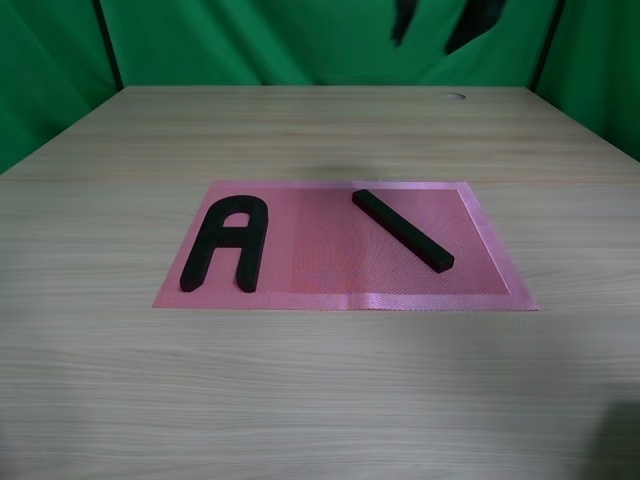
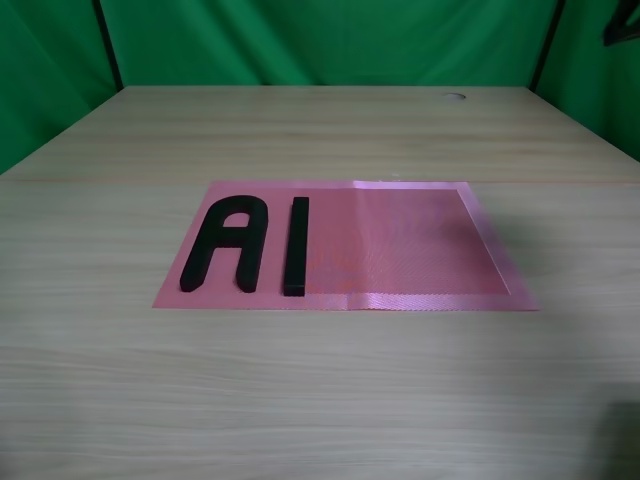
High rotational variation: House Building and Letter Aligning gain +35 pp and +30 pp, averaging +32.5 pp across the group.
Intermediate variation: Banana in Pot and Block Storing gain +15 pp and +10 pp, averaging +12.5 pp.
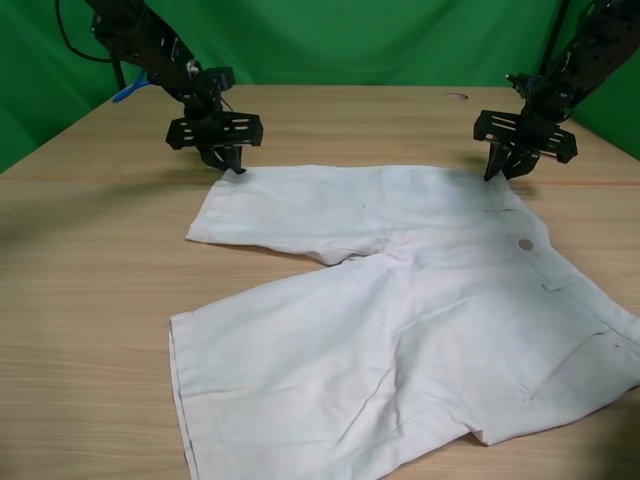
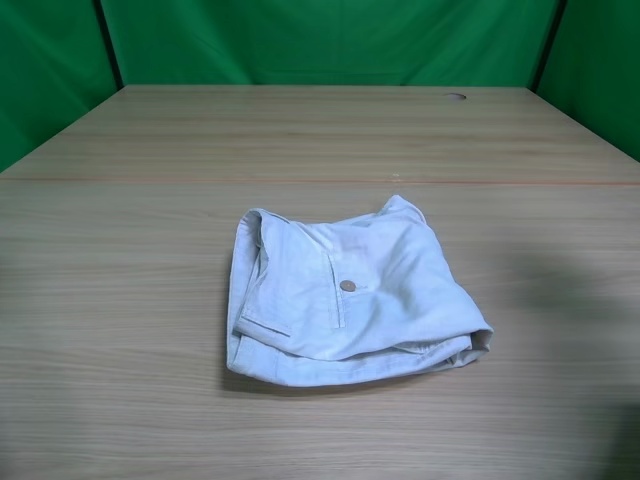
Low variation: Shorts Folding remains at 85% for both methods. The high-to-intermediate-to-low ordering is consistent with larger benefits when grasps and placements must adapt to object pose.
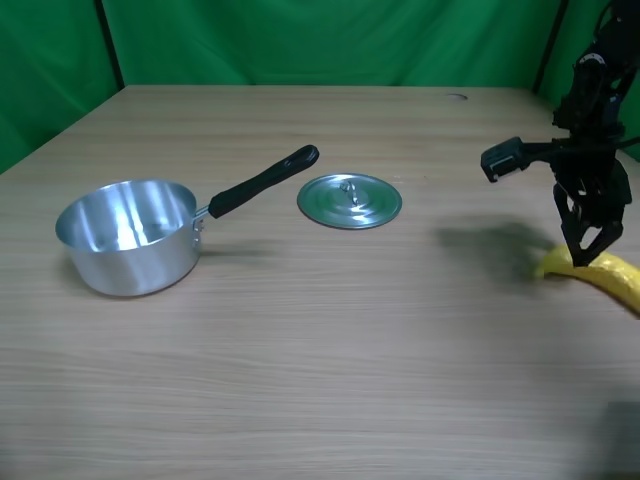
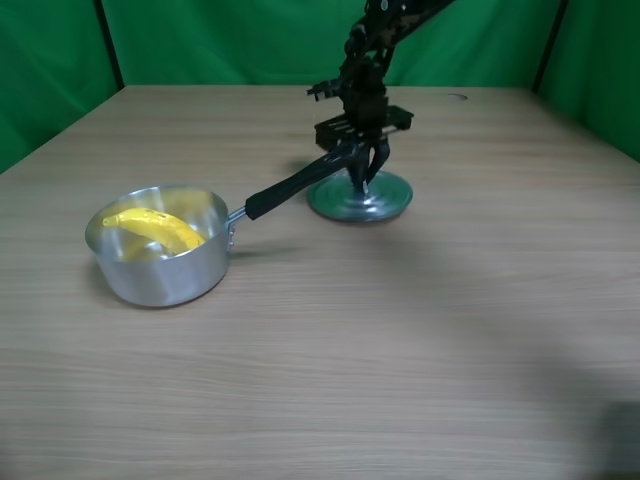
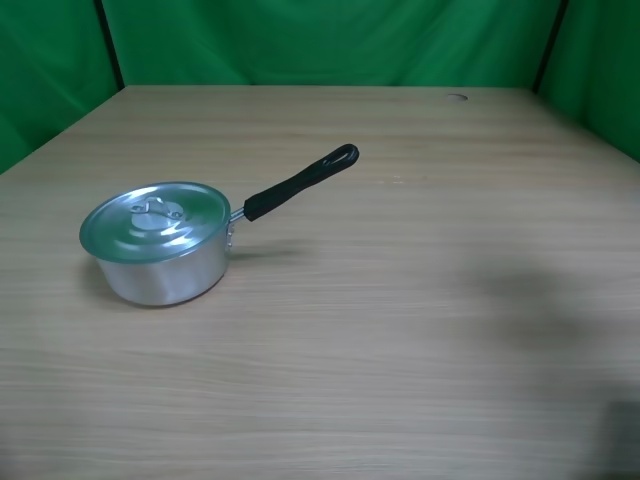
Banana in Pot
75% vs. 60%
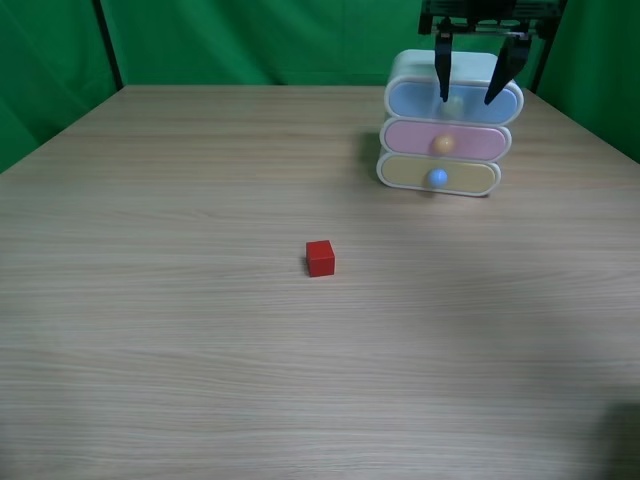
Block Storing
55% vs. 45%
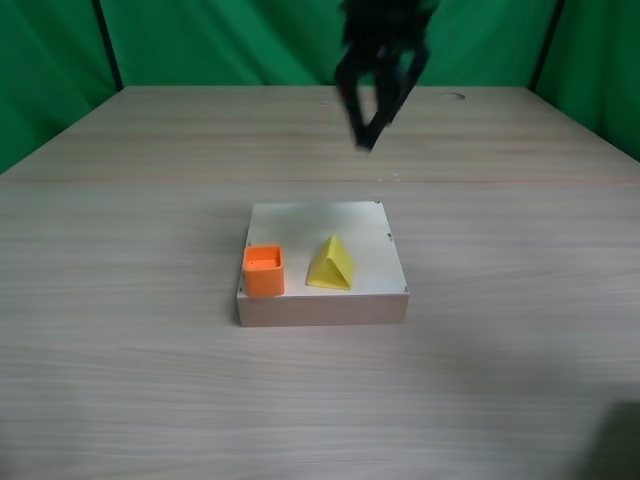
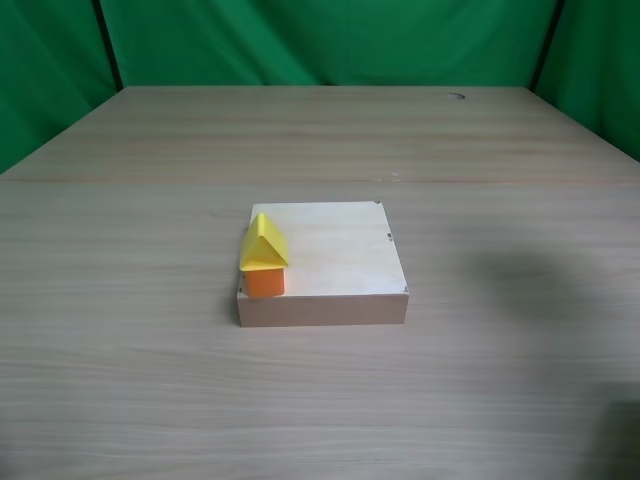
House Building
50% vs. 15%
Letter Aligning
95% vs. 65%
Shorts Folding
85% vs. 85%
Figure 5. Real-robot tasks on Mobile ALOHA. For each task the first and last frames show the initial and goal states. Success rates: EquiVLA (blue) vs. GR00T N1.5 over 20 trials.
Ablation Highlights
LIBERO success under relative control. The ViT is frozen unless marked unfrozen; all runs use the same pretrained checkpoint and matched training settings.
Method
LIBERO-10
Goal
Object
Spatial
Avg ↑
GR00T N1.5
72.0
75.0
83.4
82.0
78.1
+ re-init. DiT
76.0
86.6
90.8
86.2
84.9
+ EquiActor
82.6
88.0
95.2
98.2
91.0
EquiVLA
87.6
89.4
98.0
95.4
92.6
GR00T N1.5 (unfrozen)
77.4
82.8
81.6
88.4
82.5
EquiVLA (unfrozen)
90.0
91.4
96.6
95.2
93.3
A matched-size reinitialized DiT reaches 84.9%; replacing it with EquiActor raises success to 91.0% (+6.1 pp), and adding EquiPerceptor reaches 92.6% (+1.6 pp). Unfreezing the ViT raises EquiVLA to 93.3%, while it still retains a +10.8 pp advantage over the unfrozen baseline. For group order, $C_8$ is selected at 92.6% and 194 ms/step; $C_4$ is 1.0 pp lower but faster (161 ms/step), while $C_{16}$ reaches 94.3% at 25% higher latency than $C_8$.
Per-Task Videos
Banana in Pot
Block Storing
House Building
Letter Aligning
Shorts Folding
Video
EquiVLA overview: method, simulation results, and real-robot demonstrations.